top of page
HOME
ABOUT
READ
WATCH
SHOP
COURSES
PWay Calc
Contact
All Videos
Watch all the videos from The PWay Engineer YouTube Channel here
Full Videos
Play Video
Play Video
16:20
From Spikes to Spring Clips: Why Railway Fastenings Evolved
Sponsored by Pandrol This video is supported by Pandrol, engineers and manufacturers of rail fastening systems used across networks worldwide. For decades Pandrol has developed fastening solutions engineered to the specific demands of each network, environment, and project. Their systems are designed for performance, durability, and the practical realities of working railway infrastructure. Find out more at https://www.pandrol.com/products/fastening-systems Download my FREE Track Component ID Guide and find out about the components that make up the track system: https://bit.ly/TrackComponentIDGuide Want the full guide to track components? Get it here: https://bit.ly/componentsguide Rail fastenings secure the rail to the sleeper at every location across the network. The clip you see today is the product of decades of development, driven by a railway that kept changing what it needed from the fixing underneath it. This video covers the full evolution. Spike fixings, chairs and keys, the elastic spring clip, each one a response to a specific set of demands. Remove the joints with continuously welded rail and the fastening stops being a hold-down. It becomes part of the system resisting thermal forces along the entire welded length. A driven spike cannot deliver that consistently. The elastic clip was designed to. Other videos you might find interesting: Why is a Rail Shaped Like That - https://youtu.be/L5z3KrvmWgI Railway Sleepers: Which Type Performs Best - https://youtu.be/eO-s4Odq8sI Looking for help with Railway Track Geometry? Here is my free email course: https://bit.ly/TrackGeoCourse Video Chapters 00:00 - Intro 00:44 - What a Fastening Actually Does 03:29 - Early Fastening Methods 04:15 - Chairs, Keys & Changing Rail Forms 05:18 - Flat Bottom Rail 07:18 - Why the Railway Started Demanding More 08:31 - Continuously Welded Rail & Restraint 09:49 - The Elastic Spring Clip 12:10 - From Clips to Complete Systems 13:55 - Where the Industry is Now Connect with us! Website: [https://www.thepwayengineer.com](https://www.thepwayengineer.com/) Instagram: https://www.instagram.com/the_pway_engineer
Play Video
Play Video
16:18
Why Bolted Rail Joints Work Loose . The 6 Forces Engineers Deal With
Download my FREE Track Component ID Guide and find out about the components that make up the track system: https://bit.ly/TrackComponentIDGuide Want the full guide to track components? Get it here: https://bit.ly/componentsguide A bolted rail joint connects two rail ends together. It's an older method now that continuous welding is standard, but bolted joints are still a regular feature on today's railway. Six mechanisms reduce the clamping force holding a bolted joint together: vibration, dynamic loading at the discontinuity, settlement and fretting wear, thermal movement and joint gap behaviour, corrosion, and maintenance-induced loosening from incorrect bolt tightening order and torque control. This video covers why joint closure temperature matters, and how a joint can look assembled with the nut tight and still be under-clamped. It also covers how overtightening with a powered wrench can crack a fishplate. Not every joint failure comes from wear. Some of it comes from how we maintain them. Sponsored by Staytite Rail This video is sponsored by Staytite Rail, specialists in innovative rail fastening solutions. Discover more about Staytite Rail at https://staytite-rail.com/ Hardlock Nuts The Hardlock Nut is designed to resist loosening caused by vibration, providing a powerful self-locking solution for demanding applications. Using a unique wedge principle, the Hardlock Nut creates an unprecedented locking force and is trusted by engineers across Japan, America, the United Kingdom and Europe. Find out more about Hardlock Nuts: https://staytite-rail.com/hardlock-nuts/ Other videos you might find interesting: Why Joint Gaps Matter? - https://youtu.be/IxkFlXGm3Zs Why has Continuous Welded Rail Replaced Jointed Railway Tracks? - https://youtu.be/2M8p7Kd2TOc Looking for help with Railway Track Geometry? Here is my free email course: https://bit.ly/TrackGeoCourse Video Chapters 00:00 Intro 00:59 - How a Bolted Rail Joint Works 03:46 - Cause 1 — Vibration 05:00 - Cause 2 — Dynamic Loading at the Rail Joint 06:28 - Cause 3 — Settlement, Wear & Loss of Contact 07:42 - Cause 4 — Thermal Movement & Joint Gap Behaviour 08:55 - Cause 5 — Corrosion & Poor Condition 10:12 - Cause 6 — Maintenance 11:55 - Why Railway Bolts Are More Vulnerable 13:27 - What Happens if the Problems are Ignored? 12:15 - The Real Lesson Connect with us! Website: [https://www.thepwayengineer.com](https://www.thepwayengineer.com/) Instagram: https://www.instagram.com/the_pway_engineer
Play Video
Play Video
14:25
Why Do Rails Break? The 8 Causes Behind It
Download my FREE Track Component ID Guide and find out about the components that make up the track system: https://bit.ly/TrackComponentIDGuide Want the full guide to track components? Get it here: https://bit.ly/componentsguide Broken railway rails happen more often than most people expect, and the cause is rarely simple. In this video I look at the 8 causes behind broken rail and explains why the final break is can be last stage of a much longer process. Most breaks start small. An internal defect in the rail's steel, a surface crack from rolling contact fatigue, corrosion at the rail foot, or poor support beneath the sleeper. I take you through each cause in turn, from hidden defects like tache ovale and LVS, through wheel damage, weld failures and jointed track, to the role cold weather plays in exposing weaknesses that have been building for a long time. Rail breaks are rarely single-cause failures. One factor starts the weakness, another helps it grow, and eventually something finally gives. That is the real lesson, and understanding it is what good rail management is built on. How Do Engineers Weld Railway Rails Together? - https://youtu.be/YVrtj6iZ4CQ Why has Continuous Welded Rail Replaced Jointed Railway Tracks? - https://youtu.be/2M8p7Kd2TOc Looking for help with Railway Track Geometry? Here is my free email course: https://bit.ly/TrackGeoCourse Video Chapters 00:00 Intro 00:34 - The Life of a Rail 01:46 - Reason 1 — Internal Rail Defects 03:04 - Reason 2 — Rolling Contact Fatigue & Surface Defects 04:19 - Reason 3 — Wheel Flats, Wheel Burns & Impact Damage 05:13 - Reason 4 — Weld Defects & Weaknesses 07:09 - Reason 5 — Jointed Track, Bolt Holes and Rail End Damage 08:24 - Reason 6 — Corrosion and Section Loss 09:51 - Reason 7 — Poor Support, Voiding and Bending Fatigue 11:11 - Reason 8 — Cold Weather and High Tensile Stress 12:15 - The Real Lesson Connect with us! Website: [https://www.thepwayengineer.com](https://www.thepwayengineer.com/) Instagram: https://www.instagram.com/the_pway_engineer
Play Video
Play Video
08:02
Why Track Gauge Matters More Than You Think in Railways
Track gauge is often described as just the distance between the two rails. But that one measurement quietly shapes how an entire railway behaves. It affects train stability, curve design, rolling stock size, maintenance, interoperability between networks, and even how railways are routed through difficult terrain. And once a gauge is chosen, it becomes one of the hardest railway design decisions to reverse. So why does the world use different gauges? In this video, I explain what track gauge actually is, why it affects railway behaviour so significantly, and why different countries adopted different approaches. I cover the differences between narrow, standard, and broad gauge, what happens when incompatible railway systems meet at a break of gauge, and why changing gauge is far more complicated than simply moving the rails closer together or further apart. Whether you are new to railway engineering or already working in the industry, understanding gauge helps explain why railways around the world developed so differently — and why those early decisions still shape railway operations today. If you want a clearer picture of how track components work together — including rails, pads, insulators, clips, and baseplates — download my Track Components ID Guide here for FREE: https://bit.ly/TrackComponentIDGuide Major derailments change the railway for ever. Find out how in this video👇👇👇 https://youtu.be/zA1ar-ClNu4 How do trains steer around corners? I explain all here👇👇👇 https://youtu.be/_E4POBHGeDM Have you ever wondered why rails are shaped like they are? Find out here👇👇👇 https://youtu.be/L5z3KrvmWgI For all my videos on track Geometry, check out this playlist! 👇👇👇 https://www.youtube.com/playlist?list=PLQzlnixSFeE2g2vJxUAPumNbj8-V5I012 🚀 Want more in-depth insights? Sign up for our FREE Horizontal Track Geometry Basics email course! Receive daily knowledge bombs straight to your inbox – no strings attached! 🎓🎓Transform your understanding of railway track design—sign up for our free 6-day email course and master the essentials of horizontal geometry! https://bit.ly/MasterHorizontalTrackGeometry 📗📗FREE PDF DOWNLOAD Free Downloadable PDF Guide for Cant! Hit the link to get yours 👇👇👇 https://bit.ly/CantPDF 📖📚 Looking for a good book to help your learning? 👇Check out this one👇 https://amzn.to/3JFFvpu 📖📖 Want to know more about Railway Track Geometry? Hit this link👇👇👇 https://thepwayengineer.ck.page/products/the-track-geometry-bundle 📖📖 Want to know more about Railway Components? Hit this link👇👇👇 https://thepwayengineer.ck.page/products/track-component-guide If you have enjoyed this video, and want to support the channel you can give me a tip at the link below! Thank you 🙏🙏🙏 https://bit.ly/pwayengineertips Connect with us! Website: [https://www.thepwayengineer.com](https://www.thepwayengineer.com/) Instagram: https://www.instagram.com/the_pway_engineer Video Chapter's: 00:00 - Intro 00:37 - Why Gauge Has Outsized Effects 01:45 - What Track Gauge Actually Is 02:50 - Why the World Uses Different Gauges 04:24 - The Cost of Incompatibility 06:05 - Gauge as a Long-Term Constraint
Play Video
Play Video
13:27
VERSE Testing: How Rail Stress Is Checked
How do engineers measure rail stress without cutting the rail? That’s where VERSE testing comes in. VERSE testing is used to determine the stress free temperature (SFT) of continuously welded rail. That number helps engineers understand when compressive forces start to build — and how buckle risk should be managed. In this video, I explain: - What VERSE testing is - How it measures the rail’s tension state - Why SFT can change over time - Why unknown rail stress becomes a management problem - How VERSE can reduce unnecessary cutting, restressing and rewelding This video is sponsored by Pandrol. Pandrol supports infrastructure managers and maintainers with rail stress management with tools built for this exact problem. Their VERSE® equipment is used to determine SFT on site, providing a way to validate the SFT value without cutting into the rail. Find out more: https://www.pandrol.com/product/verse-stress-free-temperature-measurement/ Check out and subscribe to Pandrol's YouTube Channel: @Pandrol If you want a clearer picture of how track components work together — including rails, pads, insulators, clips, and baseplates — download my Track Components ID Guide here for FREE: https://bit.ly/TrackComponentIDGuide Want to find out about more about the TWO main way rails are welded & compare them both? Check out this video👇👇👇 https://youtu.be/OUsJJBzspiw How do railways prepare for the hot summer weather? I explain all here👇👇👇 https://youtu.be/Y_ut0Tzq7w8 Have you ever wondered why rails are shaped like they are? Find out here👇👇👇 https://youtu.be/L5z3KrvmWgI For all my videos on Rails, check out this playlist! 👇👇👇 https://www.youtube.com/playlist?list=PLQzlnixSFeE2jlQemCsAhn7tni31sODwB 🚀 Want more in-depth insights? Sign up for our FREE Horizontal Track Geometry Basics email course! Receive daily knowledge bombs straight to your inbox – no strings attached! 🎓🎓Transform your understanding of railway track design—sign up for our free 6-day email course and master the essentials of horizontal geometry! https://bit.ly/MasterHorizontalTrackGeometry 📗📗FREE PDF DOWNLOAD Free Downloadable PDF Guide for Cant! Hit the link to get yours 👇👇👇 https://bit.ly/CantPDF 📖📚 Looking for a good book to help your learning? 👇Check out this one👇 https://amzn.to/3JFFvpu 📖📖 Want to know more about Railway Track Geometry? Hit this link👇👇👇 https://thepwayengineer.ck.page/products/the-track-geometry-bundle 📖📖 Want to know more about Railway Components? Hit this link👇👇👇 https://thepwayengineer.ck.page/products/track-component-guide If you have enjoyed this video, and want to support the channel you can give me a tip at the link below! Thank you 🙏🙏🙏 https://bit.ly/pwayengineertips Connect with us! Website: [https://www.thepwayengineer.com](https://www.thepwayengineer.com/) Instagram: https://www.instagram.com/the_pway_engineer Video Chapter's: 00:00 - Intro 00:24 - What Rail Stress Is 03:51 - How Rail SFT Changes Over Time 07:07 - Why Incorrect Rail Stress Matters & Why It's Hard to Know 08:31 - VERSE Testing: The Solution 10:42 - Why VERSE Is A Valuable Option 12:11 - Network-Level Perspective
Play Video
Play Video
10:07
When Hot Rails Become Dangerous: CRT, Buckling Risk, and What Engineers Control
Hot weather doesn’t create buckle risk because the air is warm. It creates buckle risk because rail temperature rises, forces build in the steel, and each site reaches its limit at a different point. In this video I explain Critical Rail Temperature (CRT), why it varies from one section of track to the next, and the four factors that decide how much hot-weather risk a site carries. You’ll find out: - Why rail temperature matters more than air temperature for buckle risk - Why CRT is site-specific and can change over a few hundred metres - The 4 factors that decide CRT, including rail condition and ballast restraint - How curves and ballast disturbance change the hot-weather risk picture - What engineers can actually control, and what is fixed by the track you inherit This video is sponsored by RailSense, the team behind TempSense and BuckleSense. Real-time monitoring for temperature and movement on the track. Find out more: https://railsense.co.uk/products/track-temperature-monitor/ Check out and subscribe to RailSense's YouTube Channel: @railsense Want an easy, accessible introduction to railway track geometry? Why not sign up for my FREE Track Geometry email course → https://bit.ly/TrackGeoCourse Joint Gaps are CRUCIAL to hot weather management, find out why! Check out this video👇👇👇 https://youtu.be/IxkFlXGm3Zs Find out why Continuously Welded Rail (CWR) is better than Jointed Track. Find out more here👇👇👇 https://youtu.be/2M8p7Kd2TOc Want to know what ballast is? This is the video you need👇👇👇 https://youtu.be/RcmCLVd5iuI For all my videos on Railway & the weather, check out this playlist! 👇👇👇 https://www.youtube.com/playlist?list=PLQzlnixSFeE3-37CiNiEQ1cuRFHf8WIyc 🚀 Want more in-depth insights? Sign up for our FREE Horizontal Track Geometry Basics email course! Receive daily knowledge bombs straight to your inbox – no strings attached! 🎓🎓Transform your understanding of railway track design—sign up for our free 6-day email course and master the essentials of horizontal geometry! https://bit.ly/MasterHorizontalTrackGeometry 📗📗FREE PDF DOWNLOAD Free Downloadable PDF Guide for Cant! Hit the link to get yours 👇👇👇 https://bit.ly/CantPDF 📖📚 Looking for a good book to help your learning? 👇Check out this one👇 https://amzn.to/3JFFvpu 📖📖 Want to know more about Railway Track Geometry? Hit this link👇👇👇 https://thepwayengineer.ck.page/products/the-track-geometry-bundle 📖📖 Want to know more about Railway Components? Hit this link👇👇👇 https://thepwayengineer.ck.page/products/track-component-guide If you have enjoyed this video, and want to support the channel you can give me a tip at the link below! Thank you 🙏🙏🙏 https://bit.ly/pwayengineertips Connect with us! Website: [https://www.thepwayengineer.com](https://www.thepwayengineer.com/) Instagram: https://www.instagram.com/the_pway_engineer Video Chapter's: 00:00 - Intro 00:45 - What Is CRT? 01:46 - The Key Factors That Affect CRT 05:02 - Why CRT Matters in Practice
Play Video
Play Video
11:40
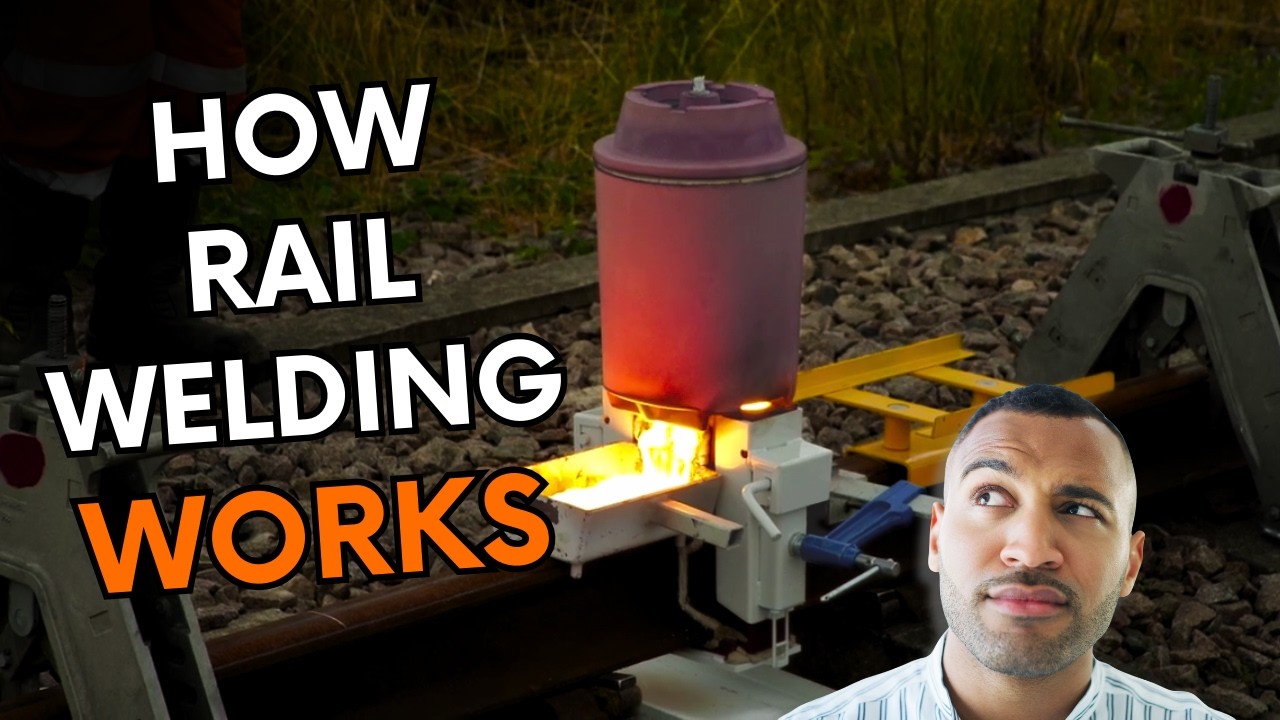
How Do Engineers Weld Railway Rails Together? (Aluminothermic Welding Explained)
Aluminothermic welding is one of the most dramatic processes used on the railway. Molten steel, intense heat, and a chemical reaction powerful enough to liquefy iron in seconds. But behind that moment is a tightly controlled engineering sequence. In this video, I break down the complete aluminothermic rail welding process step by step. From alignment and preheating to the chemical reaction, controlled pouring, cooling, inspection, and traceability. If you’ve ever wondered how two separate rails become one continuous piece of track capable of carrying thousands of tonnes of load, this is the engineering behind it. What You'll Learn • Why rail alignment (vertical, lateral, and longitudinal) decides weld performance • Why preheating to ~950°C prevents thermal shock and supports proper fusion • How the aluminothermic (thermite) reaction works — Fe₂O₃ + 2Al → 2Fe + Al₂O₃ • How molten iron separates from slag inside the crucible • Why cooling rate determines grain structure and fatigue resistance • How inspection and weld recording protect long-term track integrity This isn’t just sparks and molten metal. It’s controlled metallurgy, precision setup, and repeatable engineering. This video is sponsored by Pandrol. Track welding has been waiting for a breakthrough, and i+weld delivers. Combining Pandrol’s renowned quality with cutting edge technology, i+weld enhances efficiency, safety and performance for welding teams Find out more: https://www.pandrol.com/products/i-weld/ Check out and subscribe to Pandrol's YouTube Channel: @Pandrol If you want a clearer picture of how track components work together — including rails, pads, insulators, clips, and baseplates — download my Track Components ID Guide here for FREE: https://bit.ly/TrackComponentIDGuide Want to find out about more about the TWO main way rails are welded & compare them both? Check out this video👇👇👇 https://youtu.be/OUsJJBzspiw Find out why Joints still have a place in rails. Watch this video👇👇👇 https://youtu.be/IxkFlXGm3Zs Railways want their rails to last as long as possible! This is the video that shows you how they do it👇👇👇 https://youtu.be/kFinf_z14XI For all my videos on Rails, check out this playlist! 👇👇👇 https://www.youtube.com/playlist?list=PLQzlnixSFeE2jlQemCsAhn7tni31sODwB 🚀 Want more in-depth insights? Sign up for our FREE Horizontal Track Geometry Basics email course! Receive daily knowledge bombs straight to your inbox – no strings attached! 🎓🎓Transform your understanding of railway track design—sign up for our free 6-day email course and master the essentials of horizontal geometry! https://bit.ly/MasterHorizontalTrackGeometry 📗📗FREE PDF DOWNLOAD Free Downloadable PDF Guide for Cant! Hit the link to get yours 👇👇👇 https://bit.ly/CantPDF 📖📚 Looking for a good book to help your learning? 👇Check out this one👇 https://amzn.to/3JFFvpu 📖📖 Want to know more about Railway Track Geometry? Hit this link👇👇👇 https://thepwayengineer.ck.page/products/the-track-geometry-bundle 📖📖 Want to know more about Railway Components? Hit this link👇👇👇 https://thepwayengineer.ck.page/products/track-component-guide If you have enjoyed this video, and want to support the channel you can give me a tip at the link below! Thank you 🙏🙏🙏 https://bit.ly/pwayengineertips Connect with us! Website: [https://www.thepwayengineer.com](https://www.thepwayengineer.com/) Instagram: https://www.instagram.com/the_pway_engineer Video Chapter's: 00:00 - Intro 00:34 - Alignment 03:11 - The Mould 04:51 - Preheating 06:13 - The Chemical Reaction 08:10 - Pour & Control 09:40 - Cooling, Trimming & Finishing
Play Video
Play Video
11:40
How Do Engineers Weld Railway Rails Together? (Aluminothermic Welding Explained)
Aluminothermic welding is one of the most dramatic processes used on the railway. Molten steel, intense heat, and a chemical reaction powerful enough to liquefy iron in seconds. But behind that moment is a tightly controlled engineering sequence. In this video, I break down the complete aluminothermic rail welding process step by step. From alignment and preheating to the chemical reaction, controlled pouring, cooling, inspection, and traceability. If you’ve ever wondered how two separate rails become one continuous piece of track capable of carrying thousands of tonnes of load, this is the engineering behind it. What You'll Learn • Why rail alignment (vertical, lateral, and longitudinal) decides weld performance • Why preheating to ~950°C prevents thermal shock and supports proper fusion • How the aluminothermic (thermite) reaction works — Fe₂O₃ + 2Al → 2Fe + Al₂O₃ • How molten iron separates from slag inside the crucible • Why cooling rate determines grain structure and fatigue resistance • How inspection and weld recording protect long-term track integrity This isn’t just sparks and molten metal. It’s controlled metallurgy, precision setup, and repeatable engineering. This video is sponsored by Pandrol. Track welding has been waiting for a breakthrough, and i+weld delivers. Combining Pandrol’s renowned quality with cutting edge technology, i+weld enhances efficiency, safety and performance for welding teams Find out more: https://www.pandrol.com/products/i-weld/ Check out and subscribe to Pandrol's YouTube Channel: @Pandrol If you want a clearer picture of how track components work together — including rails, pads, insulators, clips, and baseplates — download my Track Components ID Guide here for FREE: https://bit.ly/TrackComponentIDGuide Want to find out about more about the TWO main way rails are welded & compare them both? Check out this video👇👇👇 https://youtu.be/OUsJJBzspiw Find out why Joints still have a place in rails. Watch this video👇👇👇 https://youtu.be/IxkFlXGm3Zs Railways want their rails to last as long as possible! This is the video that shows you how they do it👇👇👇 https://youtu.be/kFinf_z14XI For all my videos on Rails, check out this playlist! 👇👇👇 https://www.youtube.com/playlist?list=PLQzlnixSFeE2jlQemCsAhn7tni31sODwB 🚀 Want more in-depth insights? Sign up for our FREE Horizontal Track Geometry Basics email course! Receive daily knowledge bombs straight to your inbox – no strings attached! 🎓🎓Transform your understanding of railway track design—sign up for our free 6-day email course and master the essentials of horizontal geometry! https://bit.ly/MasterHorizontalTrackGeometry 📗📗FREE PDF DOWNLOAD Free Downloadable PDF Guide for Cant! Hit the link to get yours 👇👇👇 https://bit.ly/CantPDF 📖📚 Looking for a good book to help your learning? 👇Check out this one👇 https://amzn.to/3JFFvpu 📖📖 Want to know more about Railway Track Geometry? Hit this link👇👇👇 https://thepwayengineer.ck.page/products/the-track-geometry-bundle 📖📖 Want to know more about Railway Components? Hit this link👇👇👇 https://thepwayengineer.ck.page/products/track-component-guide If you have enjoyed this video, and want to support the channel you can give me a tip at the link below! Thank you 🙏🙏🙏 https://bit.ly/pwayengineertips Connect with us! Website: [https://www.thepwayengineer.com](https://www.thepwayengineer.com/) Instagram: https://www.instagram.com/the_pway_engineer Video Chapter's: 00:00 - Intro 00:34 - Alignment 03:11 - The Mould 04:51 - Preheating 06:13 - The Chemical Reaction 08:10 - Pour & Control 09:40 - Cooling, Trimming & Finishing
Play Video
Play Video
10:19
Voiding: The Track Movement Engineers Don’t Want
Voiding is one of the fastest ways to destroy track geometry — and one of the easiest faults to underestimate. A void is a loss of support beneath the rail and sleeper. On the surface, the track can look acceptable. But as trains pass, that missing support turns normal traffic into repeated impact loading. Over time, that movement damages components, accelerates geometry deterioration, and increases risk. In this video, I explain what voiding actually is, how it develops, and why it’s so dangerous for railway track. I look at how load should move through the rail, sleeper and ballast — and what changes when that support is lost. I also cover why voiding is often a dynamic fault, revealing itself only under traffic rather than during static inspection. You’ll see how voiding links to geometry faults, why joints and switches and crossings are particularly vulnerable, and how small support issues can quickly escalate if the underlying cause isn’t addressed. Finally, I walk through how engineers deal with voiding — from short-term interventions like packing and tamping, through to longer-term fixes such as ballast renewal and formation treatment — and why early identification is critical. If you work with railway track, track maintenance, or track geometry, understanding voiding is essential. This video is sponsored by RailSense, the team behind VoidSense — real-time monitoring for voiding in the track. Find out more → https://railsense.co.uk/products/track-void-meter/ Check out and subscribe to RailSense's YouTube Channel: @railsense Want an easy, accessible introduction to railway track geometry? Why not sign up for my FREE Track Geometry email course → https://bit.ly/TrackGeoCourse Want to find out about more about wetbeds? Check out this video👇👇👇 https://youtu.be/4MPppl7-6x8 Drainage is a crucial part of avoiding voiding. Find out more here👇👇👇 https://youtu.be/GWSpg3VLFAA Want to know what ballast is? This is the video you need👇👇👇 https://youtu.be/RcmCLVd5iuI For all my videos on Railway Components, check out this playlist! 👇👇👇 https://www.youtube.com/playlist?list=PLQzlnixSFeE2_bUyRMKj8MdvY-dNW4YCh 🚀 Want more in-depth insights? Sign up for our FREE Horizontal Track Geometry Basics email course! Receive daily knowledge bombs straight to your inbox – no strings attached! 🎓🎓Transform your understanding of railway track design—sign up for our free 6-day email course and master the essentials of horizontal geometry! https://bit.ly/MasterHorizontalTrackGeometry 📗📗FREE PDF DOWNLOAD Free Downloadable PDF Guide for Cant! Hit the link to get yours 👇👇👇 https://bit.ly/CantPDF 📖📚 Looking for a good book to help your learning? 👇Check out this one👇 https://amzn.to/3JFFvpu 📖📖 Want to know more about Railway Track Geometry? Hit this link👇👇👇 https://thepwayengineer.ck.page/products/the-track-geometry-bundle 📖📖 Want to know more about Railway Components? Hit this link👇👇👇 https://thepwayengineer.ck.page/products/track-component-guide If you have enjoyed this video, and want to support the channel you can give me a tip at the link below! Thank you 🙏🙏🙏 https://bit.ly/pwayengineertips Connect with us! Website: [https://www.thepwayengineer.com](https://www.thepwayengineer.com/) Instagram: https://www.instagram.com/the_pway_engineer Video Chapter's: 00:00 - Intro 00:36 - What We Mean By Voiding 02:43 - Why It's Dangerous 05:02 - How Voiding Starts & Worsens 07:29 - How It's Remedied
Play Video
Play Video
10:19
Voiding: The Track Movement Engineers Don’t Want
Voiding is one of the fastest ways to destroy track geometry — and one of the easiest faults to underestimate. A void is a loss of support beneath the rail and sleeper. On the surface, the track can look acceptable. But as trains pass, that missing support turns normal traffic into repeated impact loading. Over time, that movement damages components, accelerates geometry deterioration, and increases risk. In this video, I explain what voiding actually is, how it develops, and why it’s so dangerous for railway track. I look at how load should move through the rail, sleeper and ballast — and what changes when that support is lost. I also cover why voiding is often a dynamic fault, revealing itself only under traffic rather than during static inspection. You’ll see how voiding links to geometry faults, why joints and switches and crossings are particularly vulnerable, and how small support issues can quickly escalate if the underlying cause isn’t addressed. Finally, I walk through how engineers deal with voiding — from short-term interventions like packing and tamping, through to longer-term fixes such as ballast renewal and formation treatment — and why early identification is critical. If you work with railway track, track maintenance, or track geometry, understanding voiding is essential. This video is sponsored by RailSense, the team behind VoidSense — real-time monitoring for voiding in the track. Find out more → https://railsense.co.uk/products/track-void-meter/ Check out and subscribe to RailSense's YouTube Channel: @railsense Want an easy, accessible introduction to railway track geometry? Why not sign up for my FREE Track Geometry email course → https://bit.ly/TrackGeoCourse Want to find out about more about wetbeds? Check out this video👇👇👇 https://youtu.be/4MPppl7-6x8 Drainage is a crucial part of avoiding voiding. Find out more here👇👇👇 https://youtu.be/GWSpg3VLFAA Want to know what ballast is? This is the video you need👇👇👇 https://youtu.be/RcmCLVd5iuI For all my videos on Railway Components, check out this playlist! 👇👇👇 https://www.youtube.com/playlist?list=PLQzlnixSFeE2_bUyRMKj8MdvY-dNW4YCh 🚀 Want more in-depth insights? Sign up for our FREE Horizontal Track Geometry Basics email course! Receive daily knowledge bombs straight to your inbox – no strings attached! 🎓🎓Transform your understanding of railway track design—sign up for our free 6-day email course and master the essentials of horizontal geometry! https://bit.ly/MasterHorizontalTrackGeometry 📗📗FREE PDF DOWNLOAD Free Downloadable PDF Guide for Cant! Hit the link to get yours 👇👇👇 https://bit.ly/CantPDF 📖📚 Looking for a good book to help your learning? 👇Check out this one👇 https://amzn.to/3JFFvpu 📖📖 Want to know more about Railway Track Geometry? Hit this link👇👇👇 https://thepwayengineer.ck.page/products/the-track-geometry-bundle 📖📖 Want to know more about Railway Components? Hit this link👇👇👇 https://thepwayengineer.ck.page/products/track-component-guide If you have enjoyed this video, and want to support the channel you can give me a tip at the link below! Thank you 🙏🙏🙏 https://bit.ly/pwayengineertips Connect with us! Website: [https://www.thepwayengineer.com](https://www.thepwayengineer.com/) Instagram: https://www.instagram.com/the_pway_engineer Video Chapter's: 00:00 - Intro 00:36 - What We Mean By Voiding 02:43 - Why It's Dangerous 05:02 - How Voiding Starts & Worsens 07:29 - How It's Remedied
Play Video
Play Video
10:01
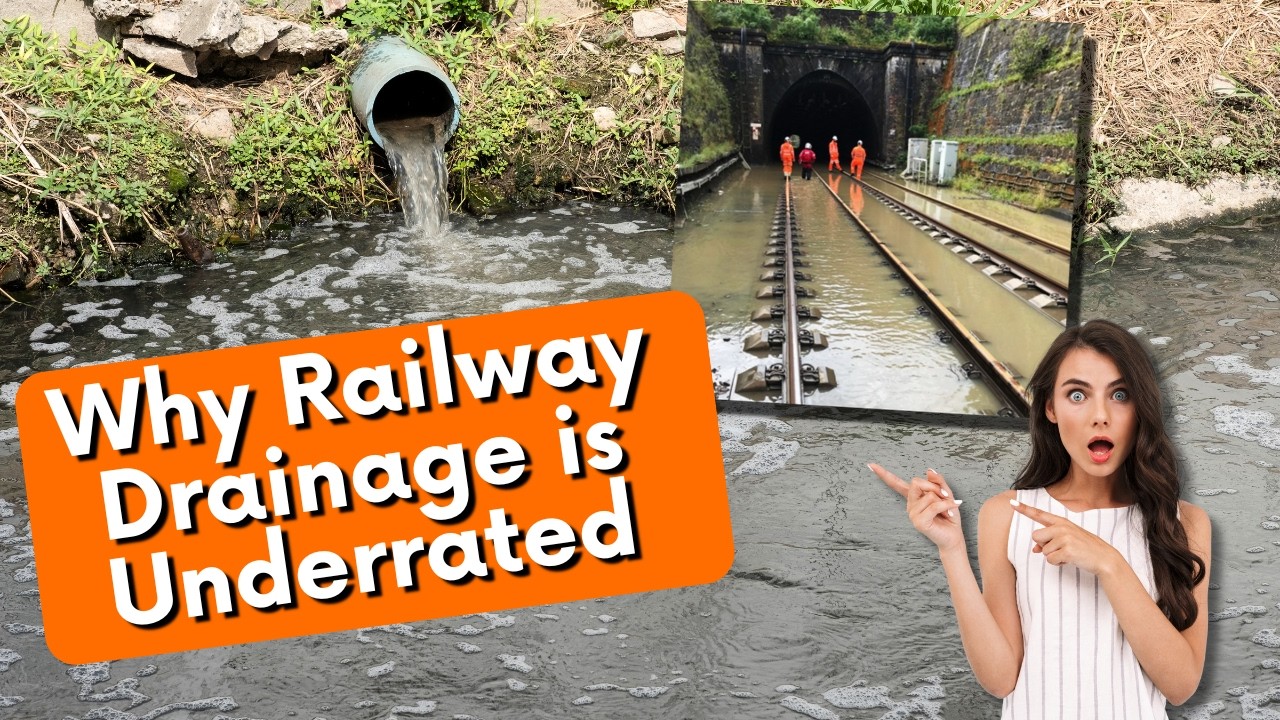
How Railway Drainage Fails — and How to Get It Right
Railway drainage rarely fails suddenly. Most problems develop quietly below the surface — until wet beds, fouled ballast, and track geometry faults start to appear. In this video, I break down how railway drainage systems actually fail, why those failures are often missed, and the design and maintenance factors that make problems more likely over time. You’ll see: Why water retention in the track bed leads to wet beds and geometry defects The common drainage failure mechanisms: collapse, blockages, failed joints, outfalls, and overwhelm How run length, gradient, pipe size, catch pits, and outfalls influence drainage performance Why drainage problems are rarely caused by a single defect What “getting drainage right” actually looks like in practice The focus here is how drainage behaves on the railway, how small issues escalate over time, and what design choices make that more or less likely. 🎓🎓Transform your understanding of railway track design—sign up for our free 6-day email course and master the essentials of horizontal geometry! https://bit.ly/MasterHorizontalTrackGeometry MORE FREE STUFF! Download the Track Component ID Guide: A visual reference for clips, pads, rail seats and fastenings → https://bit.ly/TrackComponentIDGuide 📗📗FREE PDF DOWNLOAD Free Downloadable PDF Guide for Cant! Hit the link to get yours 👇👇👇 https://bit.ly/CantPDF OTHER VIDEOS YOU MIGHT LIKE Want to know more about Railway Wet Beds? Check out this video! 👇👇👇 https://youtu.be/4MPppl7-6x8 Interested in what makes up the Railway Track Bed? This is this video for you! https://youtu.be/RC2vjqAlviI There are 7 Horizontal Track Geometry Concepts you need to know! I cover them in this video👇👇👇 https://youtu.be/7SAu5okEvXE OTHER 📖📚 Looking for a good book to help your learning? 👇Check out this one👇 https://amzn.to/3JFFvpu 📖📖 Want to know more about Railway Track Geometry? Hit this link👇👇👇 https://thepwayengineer.ck.page/products/the-track-geometry-bundle 📖📖 Want to know more about Railway Components? Hit this link👇👇👇 https://thepwayengineer.ck.page/products/track-component-guide If you have enjoyed this video, and want to support the channel you can give me a tip at the link below! Thank you 🙏🙏🙏 https://bit.ly/pwayengineertips Connect with us! Website: [https://www.thepwayengineer.com](https://www.thepwayengineer.com/) Instagram: https://www.instagram.com/the_pway_engineer Video Chapter's: 00:00 - Intro 00:32 - Why Drainage Matters 01:47 - How Drainage Fails 04:40 - Design & Maintenance Factors Behind the Failures 07:16 - How to Design It Right
Play Video
Play Video
10:03
Railway Sleepers: Which Type Performs Best? Full Breakdown
Not all railway sleepers are the same — and the material they’re made from has a huge impact on how they function once they’re installed in track. In this video I compare the four main sleeper materials used on railways today: timber, concrete, steel, and composite/plastic sleepers. Each material sits under the rail doing the same job, but the way they handle load, stiffness, weight, durability, insulation, weathering and long-term behaviour is completely different. Understanding those differences is essential for anyone working in track, renewals, design or maintenance. This video is sponsored by Sekisui, the company behind FFU synthetic sleepers — used on bridges, crossings, and renewals around the world for over 40 years. Find out more → https://sekisui-rail.com/home.html In this breakdown I cover: • What railway sleepers actually do in the track system • How each sleeper material behaves under load and over time • When timber, concrete, steel or composites make the most sense • The strengths and weaknesses of each material • How sleeper choice affects geometry stability and maintenance needs • Whether there is such a thing as “the perfect sleeper material” This is a practical, engineering-focused comparison based on modern railway practice, not theory. If you’re an apprentice, new to track engineering, or looking to deepen your understanding of sleeper types and their real-world trade-offs, this video will give you a clear and grounded overview. Watch to learn whether one sleeper material truly stands out — or whether the right choice always depends on where it’s used. Download the Track Component ID Guide: A visual reference for clips, pads, rail seats and fastenings → https://bit.ly/TrackComponentIDGuide MORE FREE STUFF! 🚀 Want more in-depth insights into track design? Sign up for my FREE Horizontal Track Geometry Basics email course! Receive daily knowledge bombs straight to your inbox – no strings attached! 🎓🎓Transform your understanding of railway track design—sign up for our free 6-day email course and master the essentials of horizontal geometry! https://bit.ly/MasterHorizontalTrackGeometry 📗📗FREE PDF DOWNLOAD Free Downloadable PDF Guide for Cant! Hit the link to get yours 👇👇👇 https://bit.ly/CantPDF OTHER VIDEOS YOU MIGHT LIKE Want to know more about Plastic Railway Sleepers? Check out this video! 👇👇👇 https://youtu.be/M-NJoQkRP6w Interested in how railway increase rail life? This is this video for you! https://youtu.be/kFinf_z14XI Want to find out about the different categories of railway?? Check out this video👇👇👇 https://youtu.be/k0IFKn5InCM OTHER 📖📚 Looking for a good book to help your learning? 👇Check out this one👇 https://amzn.to/3JFFvpu 📖📖 Want to know more about Railway Track Geometry? Hit this link👇👇👇 https://thepwayengineer.ck.page/products/the-track-geometry-bundle 📖📖 Want to know more about Railway Components? Hit this link👇👇👇 https://thepwayengineer.ck.page/products/track-component-guide If you have enjoyed this video, and want to support the channel you can give me a tip at the link below! Thank you 🙏🙏🙏 https://bit.ly/pwayengineertips Connect with us! Website: [https://www.thepwayengineer.com](https://www.thepwayengineer.com/) Instagram: https://www.instagram.com/the_pway_engineer Video Chapter's: 00:00 - Intro 00:46 - Timber Sleepers 02:19 - Concrete Sleepers 04:40 - Steel Sleepers 05:44 - Plastic & Composite Sleepers 08:07 - Which Railway Sleeper Material is Best?
Play Video
Play Video
10:41
What Happens When Trains Lose Grip? Low Rail Adhesion
Trains run on steel wheels and steel rails — smooth on smooth. It’s efficient, but it also means the whole system depends on one small thing: rail adhesion. Adhesion is the friction between wheel and rail — the railway’s grip. It controls acceleration, braking, and every safe stop on the network. When that friction drops, trains can slip, slide, or over-run signals — and that’s where wheel-rail interaction becomes critical. In this video, I explain what adhesion actually is, how it’s measured, and what happens when wheel slip and low adhesion take over. You’ll see how a contact patch smaller than a £1 coin can decide whether a train stops exactly where it should — or keeps rolling past the platform. What’s covered: • How rail adhesion works — the science of steel-on-steel friction • Why adhesion matters for train braking, traction, and control • What causes low adhesion: moisture, rust, and leaf contamination on the railhead • How railways manage grip: treatment trains, sanding systems, and railhead cleaning • The effect of gradient, curvature, and local conditions on available grip Download my FREE Glossary of Railway Terms to learn more about concepts like adhesion, traction, and braking distance → https://bit.ly/glossRailterms Sponsored by Interflon UK, whose Clean OTR railhead cleaner removes organic residue and rust from the railhead, restoring consistent adhesion and improving railway safety and reliability year-round. Find out more: https://bit.ly/CleanOTR Watch the full explainer to see how this invisible force keeps the railway moving — safely, efficiently, and under control. MORE FREE STUFF! 🚀 Want more in-depth insights into track design? Sign up for my FREE Horizontal Track Geometry Basics email course! Receive daily knowledge bombs straight to your inbox – no strings attached! 🎓🎓Transform your understanding of railway track design—sign up for our free 6-day email course and master the essentials of horizontal geometry! https://bit.ly/MasterHorizontalTrackGeometry 📗📗FREE PDF DOWNLOAD Free Downloadable PDF Guide for Cant! Hit the link to get yours 👇👇👇 https://bit.ly/CantPDF OTHER VIDEOS YOU MIGHT LIKE Find out how the wheel rail interface in this video👇👇👇 https://youtu.be/_E4POBHGeDM Interested in how railway increase rail life? This is this video for you! https://youtu.be/kFinf_z14XI Want to find out about how Plastic and Composite sleepers are the future of the railway? Check out this video👇👇👇 https://youtu.be/M-NJoQkRP6w OTHER 📖📚 Looking for a good book to help your learning? 👇Check out this one👇 https://amzn.to/3JFFvpu 📖📖 Want to know more about Railway Track Geometry? Hit this link👇👇👇 https://thepwayengineer.ck.page/products/the-track-geometry-bundle 📖📖 Want to know more about Railway Components? Hit this link👇👇👇 https://thepwayengineer.ck.page/products/track-component-guide If you have enjoyed this video, and want to support the channel you can give me a tip at the link below! Thank you 🙏🙏🙏 https://bit.ly/pwayengineertips Connect with us! Website: [https://www.thepwayengineer.com](https://www.thepwayengineer.com/) Instagram: https://www.instagram.com/the_pway_engineer Video Chapter's: 00:00 - Intro 00:43 - What Is Adhesion? 02:58 - Safety & Operational Impacts 04:30 - The Surface Condition Factor 05:44 - The Track Design Factor 08:09 - How Railways Manage Adhesion #RailAdhesion #WheelRailFriction #RailwayEngineering #TrainBraking #RailwaySafety #TrackMaintenance #SteelOnSteel #LowAdhesion #TrainTraction #ThePWayEngineer
Play Video
Play Video
06:09
The Hidden System That Keeps Railway Track Stable
We spend our time checking rails, sleepers, switches and crossings — but the asset protecting them all is one most people never see: drainage. In this video, I break down why railway drainage is the most underrated asset on the railway — what it does, why it’s often forgotten, and the real-world impact when it fails. You’ll learn: - What drainage actually is — ditches, pipes and catch pits beneath the track. - Why out-of-sight assets are often neglected. - The chain reaction water starts when drainage stops working — wet beds, voiding and geometry faults. The payoff of good drainage — stable geometry and fewer renewals. If you’ve ever wondered what really keeps the railway stable, this video will change how you see the track. This video is sponsored by RailSense, the team behind TrackWater® — real-time monitoring for flooding and silt build-up in railway drainage systems. Find out more → https://railsense.co.uk/ Check out and subscribe to RailSense's YouTube Channel: @railsense Identify every part of the track system with my free Track Components ID Guide → https://bit.ly/TrackComponentIDGuide Want to find out about how Plastic and Composite sleepers are the future of the railway? Check out this video👇👇👇 https://youtu.be/M-NJoQkRP6w Find out how the wheel rail interface in this video👇👇👇 https://youtu.be/_E4POBHGeDM Want to know what ballast is? This is the video you need👇👇👇 https://youtu.be/RcmCLVd5iuI For all my videos on Railway Components, check out this playlist! 👇👇👇 https://www.youtube.com/playlist?list=PLQzlnixSFeE2_bUyRMKj8MdvY-dNW4YCh 🚀 Want more in-depth insights? Sign up for our FREE Horizontal Track Geometry Basics email course! Receive daily knowledge bombs straight to your inbox – no strings attached! 🎓🎓Transform your understanding of railway track design—sign up for our free 6-day email course and master the essentials of horizontal geometry! https://bit.ly/MasterHorizontalTrackGeometry 📗📗FREE PDF DOWNLOAD Free Downloadable PDF Guide for Cant! Hit the link to get yours 👇👇👇 https://bit.ly/CantPDF 📖📚 Looking for a good book to help your learning? 👇Check out this one👇 https://amzn.to/3JFFvpu 📖📖 Want to know more about Railway Track Geometry? Hit this link👇👇👇 https://thepwayengineer.ck.page/products/the-track-geometry-bundle 📖📖 Want to know more about Railway Components? Hit this link👇👇👇 https://thepwayengineer.ck.page/products/track-component-guide If you have enjoyed this video, and want to support the channel you can give me a tip at the link below! Thank you 🙏🙏🙏 https://bit.ly/pwayengineertips Connect with us! Website: [https://www.thepwayengineer.com](https://www.thepwayengineer.com/) Instagram: https://www.instagram.com/the_pway_engineer Video Chapter's: 00:00 - Intro 00:27 - What Drainage Is 01:06 - Why It's Underrated 01:57 - Consequences of Neglect 03:31 - Clues It's Not Working 04:13 - The Cost of Getting it Wrong 05:14 - The Payoff of Good Drainage
Play Video
Play Video
09:30
Are Plastic Railway Sleeper Really the Future of Track?
Plastic railway sleepers are becoming an increasingly common sight — from bridges and tunnels to plain-line renewals. But are they really sustainable, and can they ever replace timber and concrete at scale? In this video, I break down how plastic and composite railway sleepers are made, where they’re being used, and what their long-term performance looks like. We’ll look at the three main families — Recycled Plastic Composites (RPC), Hybrids, and Fibre-Reinforced Foamed Urethane (FFU) — and explore how their construction affects stiffness, durability, and cost. You’ll also see why timber is becoming harder to use, how concrete still dominates the main line, and why plastics are filling the niche roles where timber once sat. This video is sponsored by Sekisui, the company behind FFU synthetic sleepers — used on bridges, crossings, and renewals around the world for over 40 years. Find out more → https://sekisui-rail.com/home.html Want to find out about why rails are shaped the way they are? Check out this video👇👇👇 https://youtu.be/L5z3KrvmWgI Find out how the key functions of a railway sleeper👇👇👇 https://youtu.be/VUBHNYaANtY Want to know what ballast is? This is the video you need👇👇👇 https://youtu.be/RcmCLVd5iuI For all my videos on Railway Components, check out this playlist! 👇👇👇 https://www.youtube.com/playlist?list=PLQzlnixSFeE2_bUyRMKj8MdvY-dNW4YCh 🚀 Want more in-depth insights? Sign up for our FREE Horizontal Track Geometry Basics email course! Receive daily knowledge bombs straight to your inbox – no strings attached! 🎓🎓Transform your understanding of railway track design—sign up for our free 6-day email course and master the essentials of horizontal geometry! https://bit.ly/MasterHorizontalTrackGeometry 📗📗FREE PDF DOWNLOAD Free Downloadable PDF Guide for Cant! Hit the link to get yours 👇👇👇 https://bit.ly/CantPDF 📖📚 Looking for a good book to help your learning? 👇Check out this one👇 https://amzn.to/3JFFvpu 📖📖 Want to know more about Railway Track Geometry? Hit this link👇👇👇 https://thepwayengineer.ck.page/products/the-track-geometry-bundle 📖📖 Want to know more about Railway Components? Hit this link👇👇👇 https://thepwayengineer.ck.page/products/track-component-guide If you have enjoyed this video, and want to support the channel you can give me a tip at the link below! Thank you 🙏🙏🙏 https://bit.ly/pwayengineertips Connect with us! Website: [https://www.thepwayengineer.com](https://www.thepwayengineer.com/) Instagram: https://www.instagram.com/the_pway_engineer Video Chapter's: 00:00 - Intro 00:31 - Why We’re Looking Beyond Wood and Concrete 02:13 - Plastic & Composite Sleeper Families — Pros and Cons 05:59 - Where They’re Being Used 07:12 - Engineering Properties & Watchpoints
Play Video
Play Video
07:33
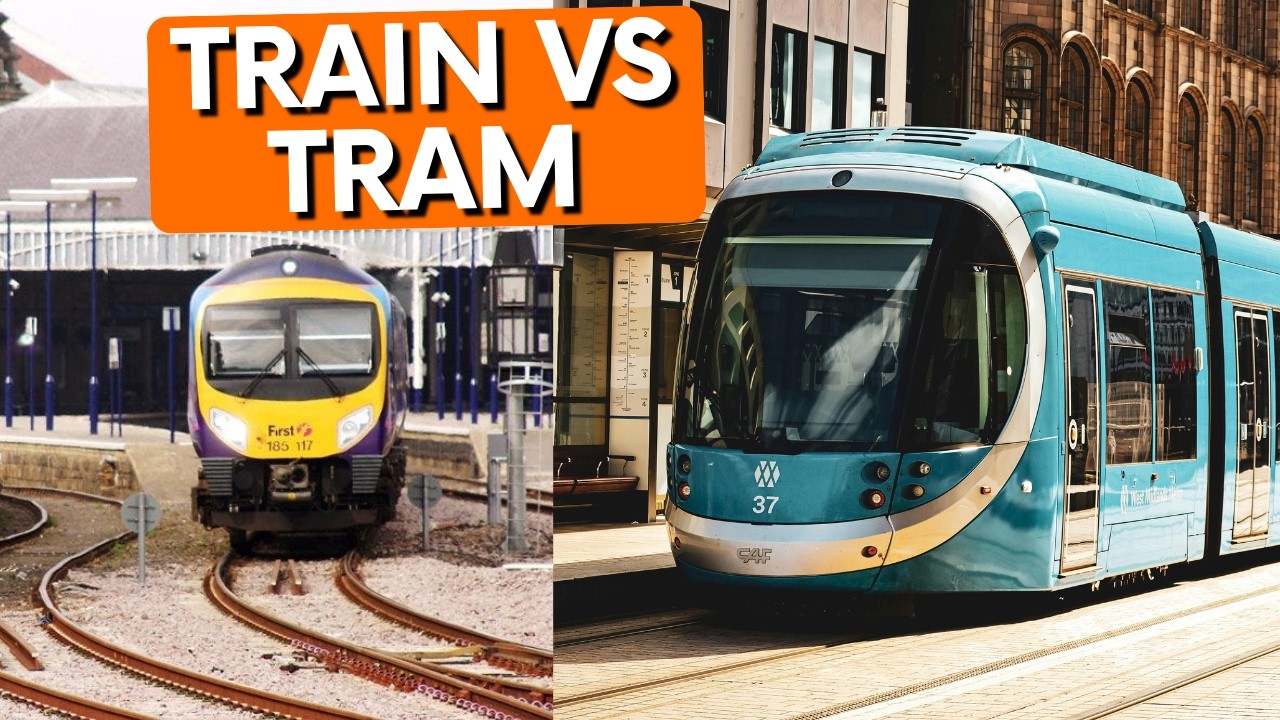
Mainline vs Metro vs Light Rail vs Trams: What’s the Difference?
Mainline vs Metro vs Light Rail vs Trams — these labels sound familiar, but what do they actually mean in UK regulation and engineering? In this video, I break down how the systems we ride every day are classified under ROGS and regulated by the ORR, and why those classifications matter for safety, design, and performance. You’ll discover: Why the London Underground and Glasgow Subway don’t neatly fit into conventional categories How light rail and tramways can look alike but face very different technical risks What makes the mainline network subject to the toughest standards The engineering clues that let you spot which kind of railway you’re looking at If you’ve ever wondered “Is the Tube a train or metro?”, or “Why do different rail systems have different rules?”, this video gives you the definitive answer. Ever wondered why a rail is shaped how it is? Find out here👇👇👇 https://youtu.be/L5z3KrvmWgI Find out how train derail! 👇👇👇 https://youtu.be/V_sUhjCt6HE Why is jointed railway a thing of the past? Click here to watch👇👇👇 https://youtu.be/2M8p7Kd2TOc Find out about all the components that make up the track 👇👇👇 https://www.youtube.com/playlist?list=PLQzlnixSFeE2_bUyRMKj8MdvY-dNW4YCh 🚀 Want more in-depth insights? Sign up for our FREE Horizontal Track Geometry Basics email course! Receive daily knowledge bombs straight to your inbox – no strings attached! 🎓🎓Transform your understanding of railway track design—sign up for our free 6-day email course and master the essentials of horizontal geometry! https://bit.ly/MasterHorizontalTrackGeometry 📗📗FREE PDF DOWNLOAD Free Downloadable PDF Guide for Cant! Hit the link to get yours 👇👇👇 https://bit.ly/CantPDF 📖📚 Looking for a good book to help your learning? 👇Check out this one👇 https://amzn.to/3JFFvpu 📖📖 Want to know more about Railway Track Geometry? Hit this link👇👇👇 https://thepwayengineer.ck.page/products/the-track-geometry-bundle 📖📖 Want to know more about Railway Components? Hit this link👇👇👇 https://thepwayengineer.ck.page/products/track-component-guide If you have enjoyed this video, and want to support the channel you can give me a tip at the link below! Thank you 🙏🙏🙏 https://bit.ly/pwayengineertips Connect with us! Website: [https://www.thepwayengineer.com](https://www.thepwayengineer.com/) Instagram: https://www.instagram.com/the_pway_engineer Video Chapter's: 00:00 - Intro 00:34 - Guided Transport Systems 01:26 - The Mainline Railway 03:01 - Light Railway & Tramways 04:37 - Underground Railways 05:53 - Why Names & Categories Matter
Play Video
Play Video
09:40
Probabilistic vs Traditional Gauging : The Future of Railway Clearance?
What is railway gauging, and why is traditional clearance assessment costing projects millions? For decades, engineers have relied on clearance envelopes based on worst-case assumptions. Traditional gauging stacks every extreme tolerance — the widest train, the roughest track, the weakest suspension — all assumed to occur at once. The result? – Oversized clearance envelopes (sometimes called a swept or kinematic envelope) – Routes declared unsuitable for safe trains – Expensive rebuilds, track lowering, and delays This video explores the shift to probabilistic gauging — a modern approach to railway clearance assessment and track geometry design. In this video you’ll learn: – What gauging is, and why it matters for rail safety – How traditional gauging uses compound tolerance stacking – Why this leads to blocked routes and unnecessary cost – How probabilistic gauging uses distributions and Monte Carlo simulation – The difference between binary pass/fail envelopes and probability curves – How probabilistic gauging formalises engineering judgement – Real-world benefits for safety, cost, and railway capacity Probabilistic gauging doesn’t reduce caution. It makes risk visible — showing the actual probability of a clearance limit being breached, and helping engineers focus where it matters. Want to find out about the Rail Disasters that led to the safety systems we now have in place? Check out this video👇👇👇 https://youtu.be/zA1ar-ClNu4 Find out how engineers manage the gap at station platforms👇👇👇 https://youtu.be/9DItdCKoMtE Want to know what gauging is? This is the video you need👇👇👇 https://youtu.be/Jzp4z0xKQ0w For all my videos on Gauging, check out this playlist! 👇👇👇 https://www.youtube.com/playlist?list=PLQzlnixSFeE2Yvuy14ZTxeJVqljciJRLP 🚀 Want more in-depth insights? Sign up for our FREE Horizontal Track Geometry Basics email course! Receive daily knowledge bombs straight to your inbox – no strings attached! 🎓🎓Transform your understanding of railway track design—sign up for our free 6-day email course and master the essentials of horizontal geometry! https://bit.ly/MasterHorizontalTrackGeometry 📗📗FREE PDF DOWNLOAD Free Downloadable PDF Guide for Cant! Hit the link to get yours 👇👇👇 https://bit.ly/CantPDF 📖📚 Looking for a good book to help your learning? 👇Check out this one👇 https://amzn.to/3JFFvpu 📖📖 Want to know more about Railway Track Geometry? Hit this link👇👇👇 https://thepwayengineer.ck.page/products/the-track-geometry-bundle 📖📖 Want to know more about Railway Components? Hit this link👇👇👇 https://thepwayengineer.ck.page/products/track-component-guide If you have enjoyed this video, and want to support the channel you can give me a tip at the link below! Thank you 🙏🙏🙏 https://bit.ly/pwayengineertips Connect with us! Website: [https://www.thepwayengineer.com](https://www.thepwayengineer.com/) Instagram: https://www.instagram.com/the_pway_engineer Video Chapter's: 00:00 - Intro 00:34 - What is Gauging 01:41 - How Traditional Gauging Works 03:09 - Hidden Judgements in Traditional Gauging 04:16 - What is Probabilistic Gauging? 05:58 - Traditional vs Probabilistic 06:52 - Real-World Impact 08:33 - Rethinking Risk
Play Video
Play Video
08:17
UK Railway Signals Explained: 4 Types and Where You’ll See Them
🚦 Not all railway signals are flashing lights on tall posts. Some have moving arms. Some sit between the rails. And some only show when your route is locked in. In this video, I break down the four main signal types still in use across the UK rail network: ✔ Semaphore signals ✔ Colour light signals ✔ Position light junction indicators (feathers) ✔ Ground signals (shunt or position light signals) We’ll look at how each type works, where you’re likely to see them, and why they’re still relevant—even with modern signalling systems. If you work trackside, or you’re building your understanding of UK rail operations, this is a must-watch. 📍 From signal sighting committees to fail-safe design logic—this video gives you a practical, real-world understanding of signalling on today’s network. Want to find out about the Rail Disasters that led to the critical signalling safety systems we now have in place? Check out this video👇👇👇 https://youtu.be/k7avK4OfPAw Find out how signallers know where trains are👇👇👇 https://youtu.be/psqseMOMTM4 Want to know what derails trains? This is the video you need👇👇👇 https://youtu.be/mURZiNJPIGA For all my videos on Signalling, check out this playlist! 👇👇👇 https://www.youtube.com/playlist?list=PLQzlnixSFeE3Hj4rva3Vy-el8gXTDaupg 🚀 Want more in-depth insights? Sign up for our FREE Horizontal Track Geometry Basics email course! Receive daily knowledge bombs straight to your inbox – no strings attached! 🎓🎓Transform your understanding of railway track design—sign up for our free 6-day email course and master the essentials of horizontal geometry! https://bit.ly/MasterHorizontalTrackGeometry 📗📗FREE PDF DOWNLOAD Free Downloadable PDF Guide for Cant! Hit the link to get yours 👇👇👇 https://bit.ly/CantPDF 📖📚 Looking for a good book to help your learning? 👇Check out this one👇 https://amzn.to/3JFFvpu 📖📖 Want to know more about Railway Track Geometry? Hit this link👇👇👇 https://thepwayengineer.ck.page/products/the-track-geometry-bundle 📖📖 Want to know more about Railway Components? Hit this link👇👇👇 https://thepwayengineer.ck.page/products/track-component-guide If you have enjoyed this video, and want to support the channel you can give me a tip at the link below! Thank you 🙏🙏🙏 https://bit.ly/pwayengineertips Connect with us! Website: [https://www.thepwayengineer.com](https://www.thepwayengineer.com/) Instagram: https://www.instagram.com/the_pway_engineer Video Chapter's: 00:00 - Intro 00:41 - Semaphor Signals 02:18 - Colour Light Signals 03:59 - Position Light Junction Indicators 04:55 - Ground Signals 06:06 - Drivers Eye View & Signal Sighting
Load More
bottom of page